

Vladyslav Heraskevych’s hopes of competing at the 2026 Winter Olympics are dead.
The Ukrainian skeleton athlete had his appeal over his Olympic disqualification denied by the Court of Arbitration for Sport on Friday, ending his hope of competing in Milano-Cortina.
“Looks like this train has left,” Heraskevych told reporters in Milan on Friday.
Heraskevych has stolen headlines with his ‘remembrance helmet’ at this year’s Olympics. The hand-painted piece features several pictures of Ukrainian athletes that have been killed during the Russian invasion of his home country, which began shortly after the 2022 Winter Games in Beijing.
“From Day 1, I told you that I think I’m right,” Heraskevych said after leaving the hearing. “I don’t have any regrets.”
What did the appeals court say?
The CAS said on Friday it had “denied an application by Skeleton athlete Vladyslav Heraskevych (Ukraine) against the International Bobsleigh & Skeleton Federation (IBSF) and the International Olympic Committee (IOC)”.
CAS Secretary-General Matthieu Reeb told reporters after the hearing that the court had “found that freedom of expression is guaranteed at the Olympic Games, but not on the field of play, which is a sacred principle.”
International Olympic Committee president Kirsty Coventry also reiterated that Heraskevych’s disqualification was justified.
“I think that he in some ways understood that but was very committed to his beliefs, which I can respect,” Coventry said. “But sadly, it doesn’t change the rules.”
Heraskevych’s helmet was said to be political in nature and therefore forbidden under the Olympic charter, which he claimed otherwise.
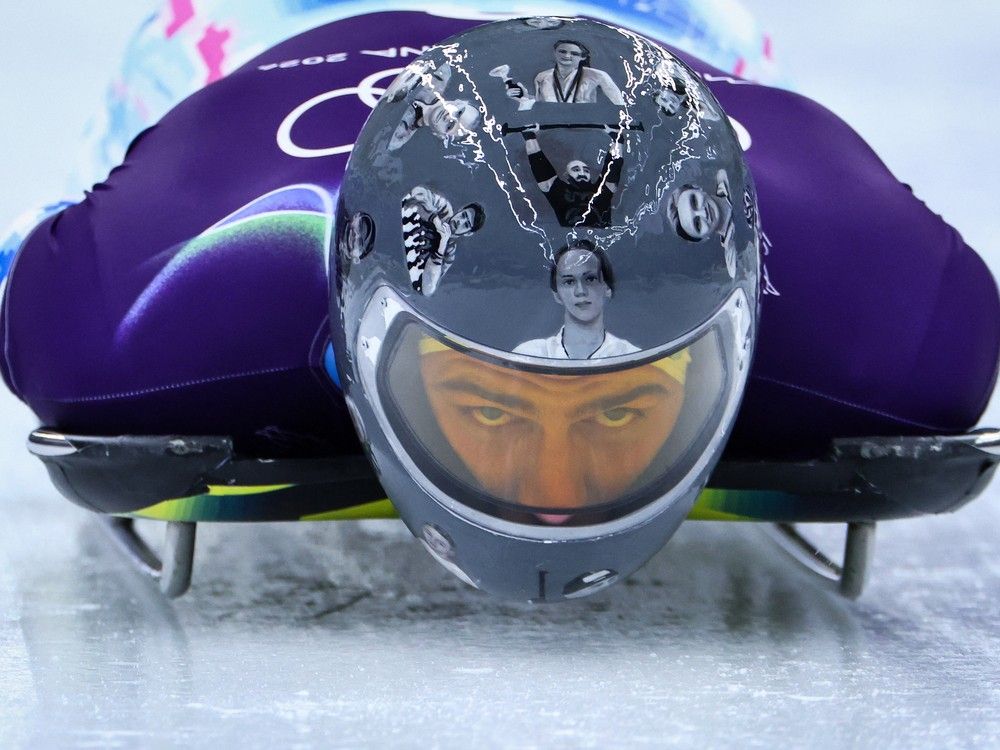
“I never expected it to be such a big scandal,” Heraskevych said, adding it only started to garner more attention after the IOC ruled that he couldn’t wear the helmet during competition.
Ukrainian president Volodymyr Zelensky has backed Heraskevych throughout the process and shared his disappointment on Thursday.
“Olympic movement should help stop wars, not play into the hands of aggressors,” Zelensky said.
What other examples have been cited?
Throughout the controversy over his helmet at the Games, Heraskevych noted that his helmet isn’t the only instance of political messaging. He said that he and other Ukrainian athletes have seen Russian flags at events around Milano-Cortina, even though they are not allowed.
He also cited other tributes over the past week, including an Italian snowboarder wearing a small Russian flag image on the back of his helmet and an Israeli skeleton athlete wearing a kippah at the opening ceremony with the names of the 11 people who were killed during the attack at 1972 Munich Games.
In each case, the IOC said the athletes were not in violation of any rules or the Olympic Charter.
“I think it’s the wrong side of history for the IOC,” Heraskevych said.