

The International Olympic Committee should know better than to think an athlete who throws himself down an icy track at 140 km/h would back down over a threat.
Vladyslav Heraskevych, a Ukrainian skeleton competitor at the 2026 Winter Games in Milano-Cortina, could now be facing disqualification over his refusal to ditch his “helmet of remembrance.”
Heraskevych has been sporting a hand-painted helmet showing images of Ukrainian sportsmen and women killed during the unlawful Russian invasion of his homeland, which began shortly after the 2022 Winter Olympics.
The IOC has issued warnings to Heraskevych, both public and private, around political messaging.
But now the situation has escalated, with the IOC imploring Heraskevych on Wednesday to back down prior to the first skeleton heats on Thursday – or face disqualification.
What did the IOC say?
“We will contact the athlete today, we will reiterate the many, many opportunities that he has to express his grief. As we discussed before, he can do so on social media, in the press conferences, in the mixed zone. So we will try to talk to him about that, try to convince him,” IOC spokesperson Mark Adams said. “We want him to compete. We really, really want him to have his moment. That’s very, very important.
“The athlete guidelines is online, they were agreed by 4,500 athletes and the input of many athlete commissions. This is what the athletes want. They want that specific moment on the field of play to be free from any distraction.
“He can and we would encourage him to express his grief. We feel his grief. We would expressly want him to do that but you know in the end let me be clear: It’s not the message, it’s the palace that counts.”
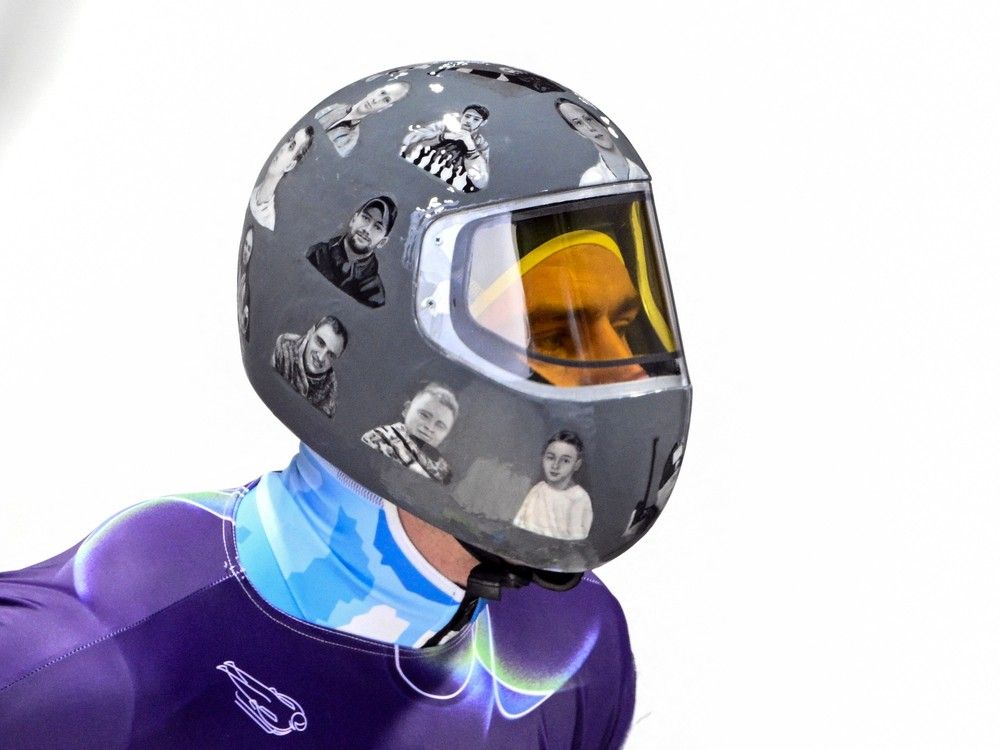
When asked directly if Heraskevych could be disqualified over the helmet protest, Adams wouldn’t deal in hypotheticals.
“I don’t think it’s helpful in this situation to look at hypotheticals particularly since we are actually trying to get to a place where we can get him to take part,” he said.
“But obviously there are rules and regulations, and without belabouring the point, there are rules and regulations that the athletes themselves want us to enforce, and they will ultimately be enforced.”
According to article 50.2 of the Olympic charter, ”no kind of demonstration or political, religious or racial propaganda is permitted in any Olympic sites, venues or other areas.”
Heraskevych has continued to wear the helmet throughout training runs this week and has been defended by Ukrainian president Volodymyr Zelensky. He also served as the flag bearer for his country during last week’s opening ceremonies.
Heraskevych is a medal threat in the competition, too. He has the fourth-best betting odds to win gold – which also likely weighs in his potential disqualification – and posted the second-fastest time during Tuesday’s training sessions.
Was there a compromise offered?
After practice Tuesday, the skeleton athlete told reporters he plans to continue wearing the helmet — in defiance of the IOC.
“I believe I can use it,” Heraskevych said, cradling the grey helmet. “So, yeah, I will use it.”
The decision escalates Heraskevych’s fight with the IOC, after the organization said it had offered a compromise: Allowing Heraskevych to compete in a black armband, minus the helmet. At practice, Heraskevych continued to wear the helmet. No armband was in sight.
“We will continue to fight for the right to compete in this helmet,” he said. “I truly believe we didn’t violate any laws or any rules.”
Taking the armband compromise would “betray” the athletes, Heraskevych told a later news conference in front of the Cortina Olympic rings. He said Europe is able to enjoy a peaceful Olympics because of the sacrifice of hundreds of his fellow athletes.
“I believe they deserve to be here today with me,” he said of the athletes on the helmet.
The Ukrainian team has formally appealed against the helmet ban.